CinaCS
Good systems don't draw attention to themselves.
They earn trust by working.

About CinaCS

CinaCS is a consulting and engineering practice focused on building durable, intentional digital systems. Since 2008, we've worked across software engineering, web development, application architecture, networking, cybersecurity, and applied artificial intelligence — supporting organizations that value clarity, reliability, and long-term thinking.

Over the years, we've developed and advised on hundreds of websites, applications, and systems, ranging from consumer-facing products to internal tools and enterprise-scale platforms. Our work spans early-stage concept development, large organizational environments, and long-lived systems that require careful modernization and stewardship.

CinaCS began when our founder, Nicholas Krut, was just 22 years old, driven by a deep curiosity about how systems behave over time — how they grow, where they break, and what makes them resilient. That early focus on fundamentals continues to shape how we approach every engagement today.

Our work in artificial intelligence and advanced systems design has grown naturally out of this foundation. Rather than treating AI as a novelty or isolated capability, we approach it as another class of system — one that must be understandable, governable, and aligned with human intent. This includes experience with AI architecture, system integration, behavioral modeling, and the design of adaptive, entity-driven interfaces.

We've operated within enterprise and regulated environments where correctness, security, and documentation are non-negotiable, as well as in independent consulting roles where flexibility and clarity are essential. Across both, our emphasis remains the same: first principles, thoughtful architecture, and solutions that can evolve without becoming brittle.

CinaCS is not built around volume or speed alone. We focus on helping clients understand their systems more clearly, reduce unnecessary complexity, and make decisions that will hold up over time — technically, operationally, and ethically.

Above all, we believe technology should serve people quietly and reliably, not demand constant attention. Our role is to help design and maintain systems that earn trust by working as intended.

Applied AI & Intelligent Systems

Our work with artificial intelligence centers on architecture, integration, and intent-driven design rather than experimentation for its own sake. We've contributed to systems involving adaptive interfaces, AI-assisted workflows, and entity-based interaction models, with a focus on long-term maintainability and responsible use.

This work is ongoing and evolving, informed by real-world constraints and a commitment to building systems that remain transparent and governable as they grow.

Values & Principles

These principles guide how we work, what we build, and what we decline.

Clarity Over Cleverness

We prioritize systems that can be understood. Elegant solutions are those that remain legible under pressure — by the people who build them, operate them, and inherit them later.

Complexity is sometimes necessary. Confusion is not.

First Principles Thinking

We favor fundamentals over fashion. Rather than chasing tools or trends, we start with what the system needs to do, what constraints it operates under, and how it will evolve over time.

Strong foundations outlast novelty.

Durability and Stewardship

We design systems to last — technically, operationally, and ethically. This means considering maintenance, security, and human impact from the beginning, not as afterthoughts.

Our responsibility extends beyond delivery.

Intentional Design

Nothing meaningful is accidental. From architecture to interfaces to AI systems, we design with clear intent, explicit boundaries, and respect for how systems influence behavior.

Technology should serve purpose, not create noise.

Calm, Measured Security

Security is most effective when it is deliberate and composed. We approach risk without fear or spectacle, integrating protection into systems in a way that supports confidence rather than fragility.

Good security enables clarity.

Respect for People and Systems

We treat both human and technical systems with respect. That means listening carefully, documenting decisions, and avoiding solutions that demand heroics to sustain.

Sustainable systems do not rely on burnout.

Responsible Use of Intelligence

As systems become more adaptive and autonomous, responsibility matters more, not less. We approach artificial intelligence as a capability that must remain understandable, governable, and aligned with human intent.

Intelligence without accountability is a liability.

Quiet Excellence

We don't measure success by visibility or volume. Many of the most effective systems are those you rarely notice — because they work.

Our goal is not to impress briefly, but to be trusted long-term.

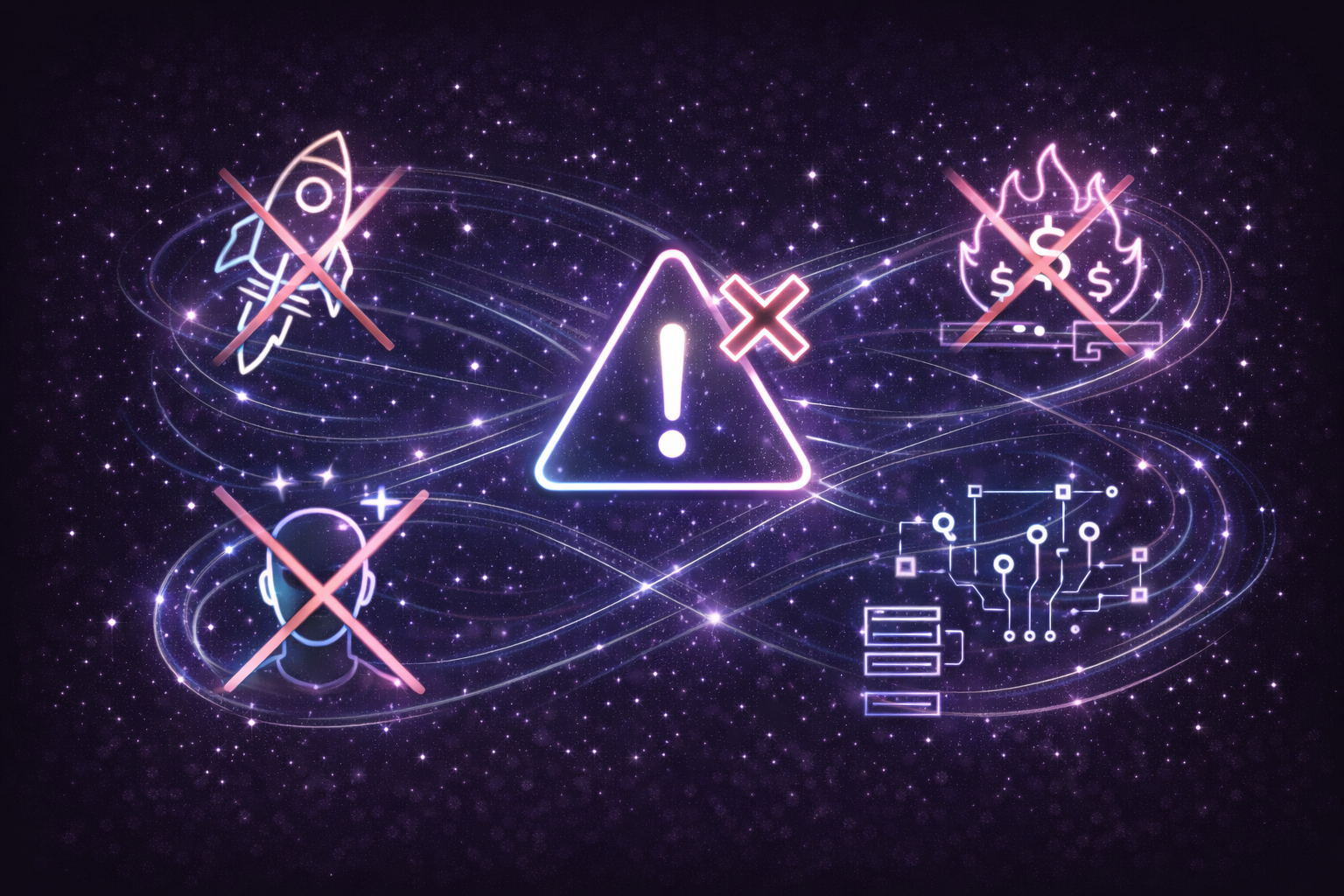
What We Don't Do

We Don't Chase Trends

We don't adopt tools, frameworks, or technologies simply because they're fashionable. Every choice is evaluated against long-term maintainability, clarity, and purpose.

Novelty without durability creates debt.

We Don't Build for Speed Alone

Fast delivery is meaningless if the result is brittle, opaque, or costly to maintain. We prioritize getting things right over getting them out the door at any cost.

Sustainable progress outperforms urgency.

We Don't Add Complexity Without Reason

Complexity is sometimes unavoidable, but it should never be accidental. We avoid over-engineering, unnecessary abstraction, and solutions that obscure how a system actually works.

If something is hard to explain, it's usually hard to trust.

We Don't Treat Security as an Afterthought

Security is not a feature to be bolted on late in a project or addressed only after a failure. We won't participate in work that treats risk casually or reactively.

Protection belongs in the architecture.

We Don't Build Black Boxes Without Accountability

Whether working with traditional software or intelligent systems, we avoid designs that can't be understood, governed, or explained. Systems should remain inspectable and accountable over time.

Opacity is not a strength.

We Don't Optimize for Short-Term Optics

We don't design systems to look impressive in demos while failing quietly in production. Decisions are made with real-world operation, maintenance, and human impact in mind.

Appearances fade. Behavior remains.

We Don't Work Without Mutual Trust

Effective work requires openness, respect, and shared responsibility. We avoid engagements where clarity, collaboration, or good faith are missing.

Strong systems are built on strong relationships.

Saying no to the wrong work allows us to do the right work well.